
Alligator - Winding Waters Wetlands, West Palm Beach, FL
Alligator - Winding Waters Wetlands, West Palm Beach, FL
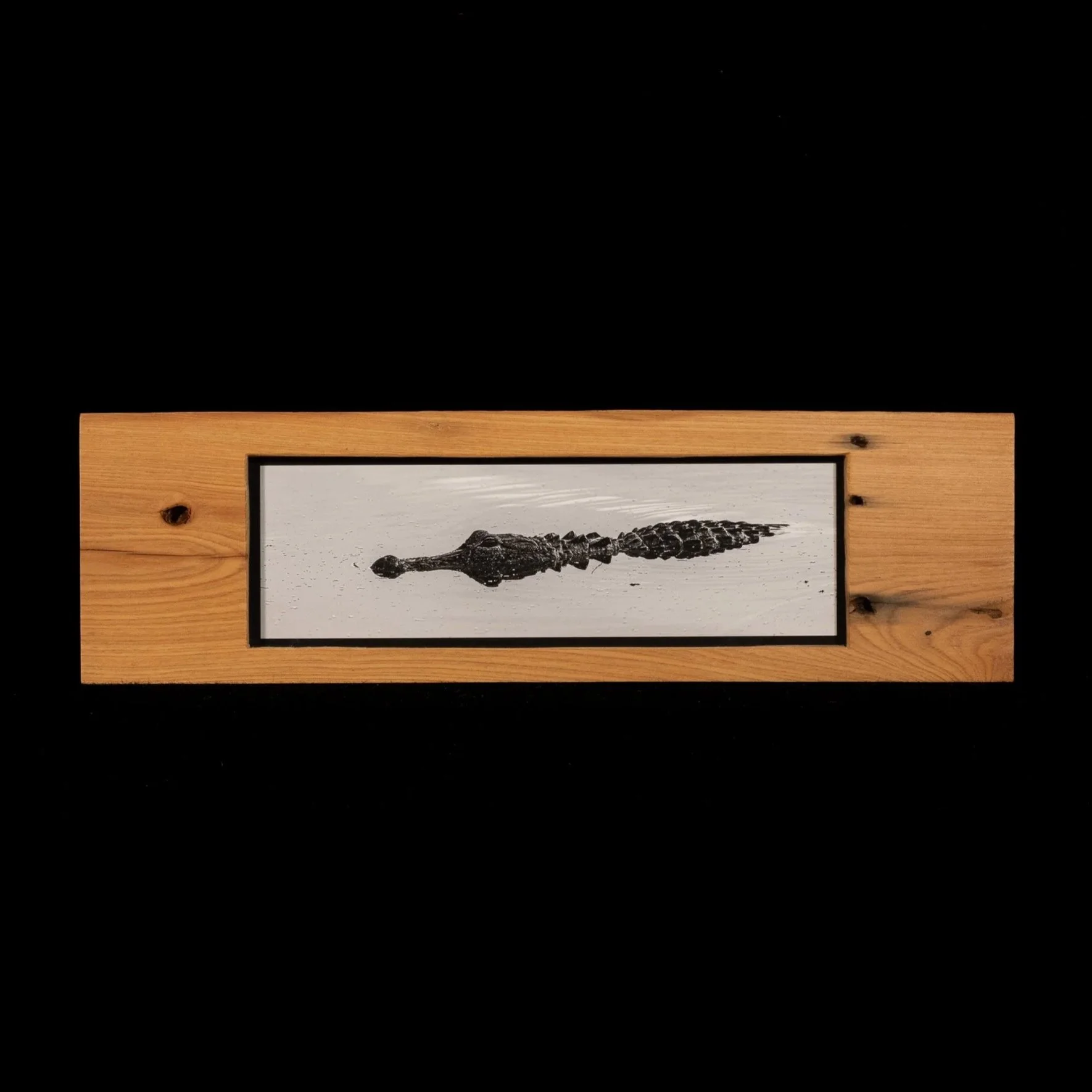
American Alligator (Alligator mississippiensis), Adult
Most Alligators that I see are from boardwalks and thus there is not much flexibility with choosing angles for photographs. I feel like seeing one like this happens rarely for me especially when the light is right as well. It all worked out this time! This photo was taken 2/4/25 at 9:31 am.
WeForest Donation: $20 (What is this?)
Print Number: 1/100
Print Size: 3 × 10 in.
Total Dimensions: 5 × 16 in.
The PHOTOGRAPH
American Alligator (Alligator mississippiensis)
The American Alligator is another conservation success story. Once on the brink of extinction, it now thrives again. It has avoided extinction more than once, as the species is around 150 million years old, thwarting nature’s attempts to extinguish it 65 million years ago when the dinosaurs died.
Adapted for life in the water, North American Alligators reside in freshwater primarily in Florida and Louisiana. Excellent swimmers, they spin their prey in the water, disorienting and drowning them. Alligators are opportunists and although they typically eat fish, turtles, snakes, and small mammals, they will also eat birds, pets such as dogs and cats and occasionally even humans in rare instances.
Often confused with Crocodiles, the easiest way to differ between the two is to look at their mouth and teeth. Both rows of a Crocodile’s teeth are visible when its mouth is closed. While the Alligator’s top row of teeth are the only ones that are visible.
The LOCATION
Winding Waters Wetlands
One of my more recent finds, Winding Waters is a magical area where I consistently see animals that I rarely see in other wildlife refuges and nature areas that I visit in Florida. I am always guaranteed to see a Limpkin, a bird I went almost 20 years without seeing until finding Winding Waters. Kites and Eagles flourish here too and a couple dozen other species are often found in a single walk through the preserve. It is located between Palm Beach Gardens and West Palm Beach, FL, and actually sits on the backside of one of the well known Florida “mountains.” Yes that would be a dump. However, it is far more breathtaking and enjoyable than that might lead one to believe. It also might be a reason that fewer people go to this nature area than many others and thus why there is so much unique life existing there.
The FRAME
Pecky Cypress (Taxodium distichum)
Known as Bald Cypress, this giant of the swamp is native to the southeastern United States. It can adapt to thrive in a wide range of soils, including very briny, salty, and water soaked areas. The pecky nature of the wood is created by a fungus that attacks the tree and eats away at its truck from the inside out. When the tree is cut down the fungus dies and leaves behind the beautiful architecture of its destruction. All of the Bald Cypress I have used in my frames has come from different parts of Louisiana.
