
Great Blue Heron - Wakodahatachee Wetlands, Delray Beach, FL
Great Blue Heron - Wakodahatachee Wetlands, Delray Beach, FL
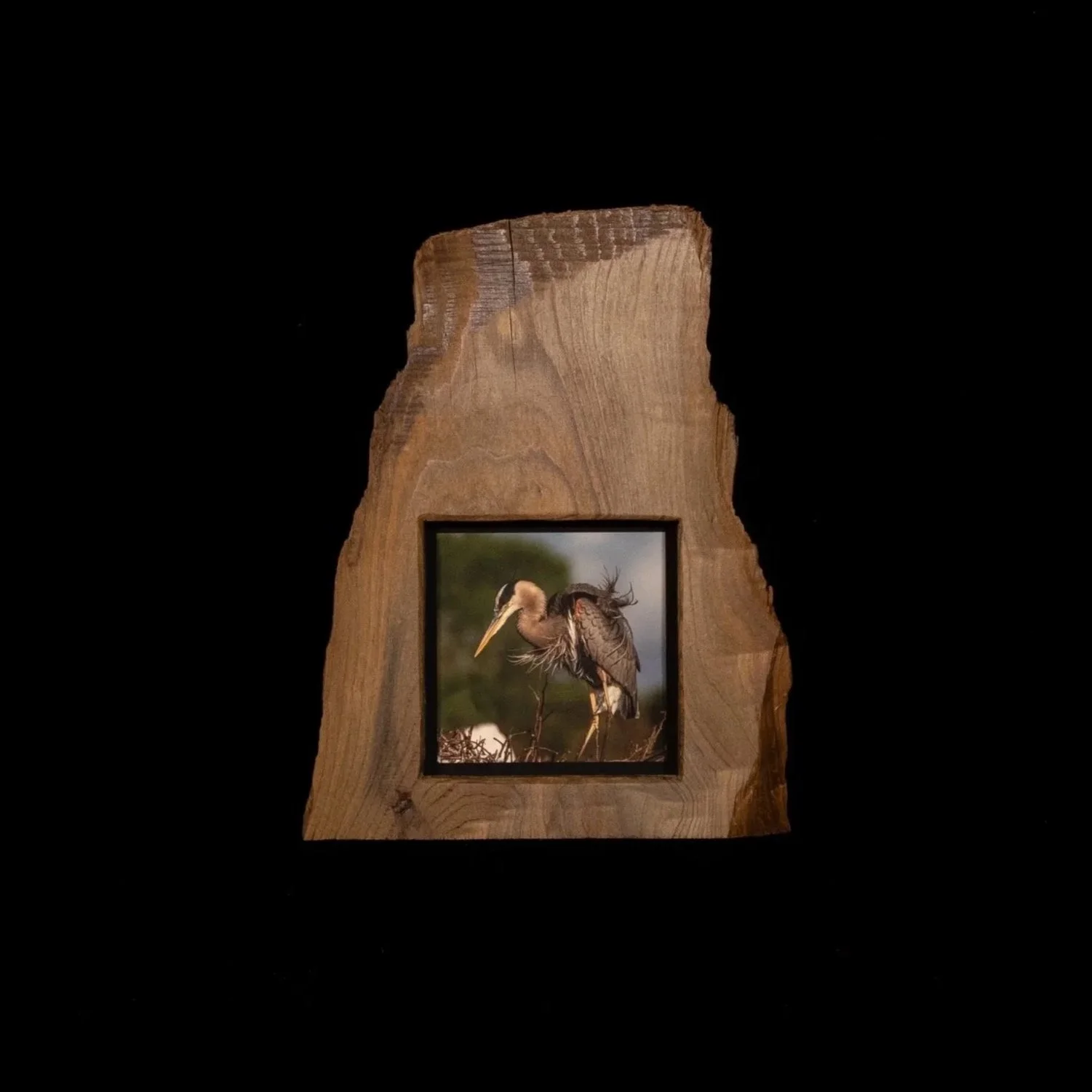
Great Blue Heron (Ardea herodias), Adult
On a particularly windy day in the wetlands, all the birds were on their nests. This photo was taken 2/20/20 at 4:51 pm.
WeForest Donation: $20 (What is this?)
Print Number: 1/100
Print Size: 3 × 3 in.
Total Dimensions: 6 × 8 in.
THE PHOTOGRAPH
Great Blue Heron (Ardea herodias)
Found in every single state on the contiguous United States, you would be hard pressed never to have seen a Great Blue Heron. Their vast range nearly stretches to Alaska in the north and all the way through Central America in the south. Stoically scanning waters for its next feast, Great Blues eat many things from large fish to even, as reported, mammals as large as gophers.
Standing as an example of the secondary connections between animals, the recovery of beaver populations through the United States has led to increased numbers of Great Blues as ponds created by beavers provide perfect hunting areas for these rather large birds, standing as tall as four and a half feet, with a wingspan of more than six.
Fun Fact: the oldest recorded Great Blue Heron was over 24 years old.
THE LOCATION
The Wakodahatchee Wetlands, Delray Beach, FL
The Wakodahatchee Wetlands park is located in Delray Beach, FL. It spans across a fifty acre lot, with a three-quarter mile boardwalk that includes multiple gazebos, benches, and informational signage. There are open ponds, marshy areas, mangrove islands for roosting, as well as a wooded area. Formerly utility land, the wetlands were developed as a natural means of managing wastewater. Palm Beach County’s Water Reclamation Facility pumps around two million gallons of water into the park daily. This water is treated, yet still contains excess mineral content. Here in the wetlands the water is naturally purified by the flora of the park and released back into the surface water supply.
Every visit, I see so much life and have yet to be disappointed. Over 150 species of birds have been spotted here as well as turtles, rabbits, and alligators. In the spring you can see large numbers of roosting Wood Storks with their young as well as many young Snowy and Reddish Egrets and Tricolored Herons, stumbling about in the tops of Red Mangroves. Anhingas are ever present, diving for fish or sunbathing atop a perch, wings outstretched. Red-winged Blackbirds chase each other through the tops of tall grasses while Swamp Hens and Gallinules weave through their stems, probing for their next meal.
The FRAME
Bald Cypress (Taxodium distichum)
Bald Cypress, the giant of the swamp, is a stately, slow growing native of the southeastern United States. Very tough, it can adapt to thrive in a wide range of soils, including very briny, salty, and water soaked areas. Able to grow very tall, it has great stability at its base thanks to its “knees.” The tallest known Cypress was about 145 feet tall. All of the Bald Cypress I have used in my frames has come from different parts of Louisiana.
