
Willet - Hutchinson Island, FL
Willet - Hutchinson Island, FL
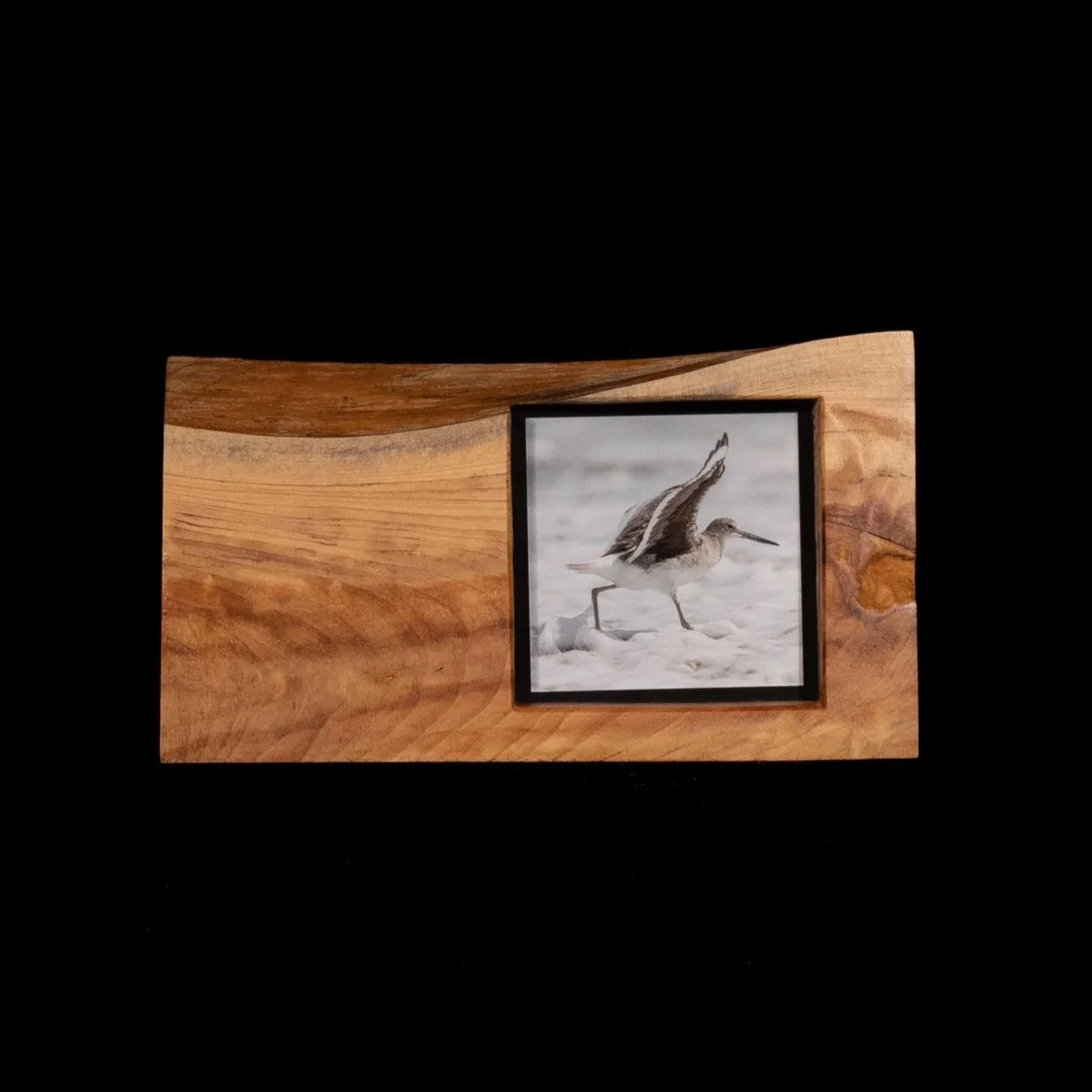
Willet (Tringa semipalmata), Adult
Walking along the beach, this Willet couldn’t decide whether to fly away or just wait for me to pass by. This photo was taken 2/13/20 at 12:55 pm.
WeForest Donation: $20 (What is this?)
Print Number: 1/100
Print Size: 3 × 3 in.
Total Dimensions: 4.5 × 8 in.
THE PHOTOGRAPH
Willet (Tringa semipalmata)
If you find yourself questioning whether or not you’re looking at a Willet, just wait for them to fly. Distinctive, thick, white and black stripes run out the length of their wings, and are are easily seen when the birds are in flight. Commonly found stalking shorelines throughout the United States, and throughout Central and South America, they feast on a plethora of creatures caught in shallow water and receding waves. Although many bird parents trade off egg caring duties, WIllet’s take it to the next level. Males are the only ones to sit on the eggs at night.
Like so many birds in North America, the Willet had nearly vanished at one point due to hunting. However, it was hunted not for its plumage, but as a popular delicacy. The Migratory Bird Treaty Act of 1918 banned hunting of the Willet, along with many other species, leading to a tremendously successful comeback.
THE LOCATION
Hutchison Island, FL
Hutchison Island is a long barrier island nestled up against the Atlantic coast of Florida, across the Indian River Lagoon from Jensen Beach, about one hour north of Miami. Sometimes referred to as Sea Turtle Beach, the island is a major nesting site for Green, Loggerhead, and Leatherback Sea Turtles.
My grandparents live on the island in a condo that was originally owned by my great grandparents. I have been visiting this beach since I was just a few weeks old, my mom even spent many magical weeks in this special place when she was a child. When I visit now, my grandparents and I spend a lot of time in the refuges, wetlands, and other wildlife sanctuaries abundant in the region. Two of my favorites are the Wakodahatchee Wetlands and the Green Cay Wetlands.
The FRAME
Bald Cypress (Taxodium distichum)
Bald Cypress, the giant of the swamp, is a stately, slow growing native of the southeastern United States. Very tough, it can adapt to thrive in a wide range of soils, including very briny, salty, and water soaked areas. Able to grow very tall, it has great stability at its base thanks to its “knees.” The tallest known Cypress was about 145 feet tall. All of the Bald Cypress I have used in my frames has come from different parts of Louisiana.
