
Green Iguana - J.N. "Ding" Darling National Wildlife Refuge, Sanibel Island, FL
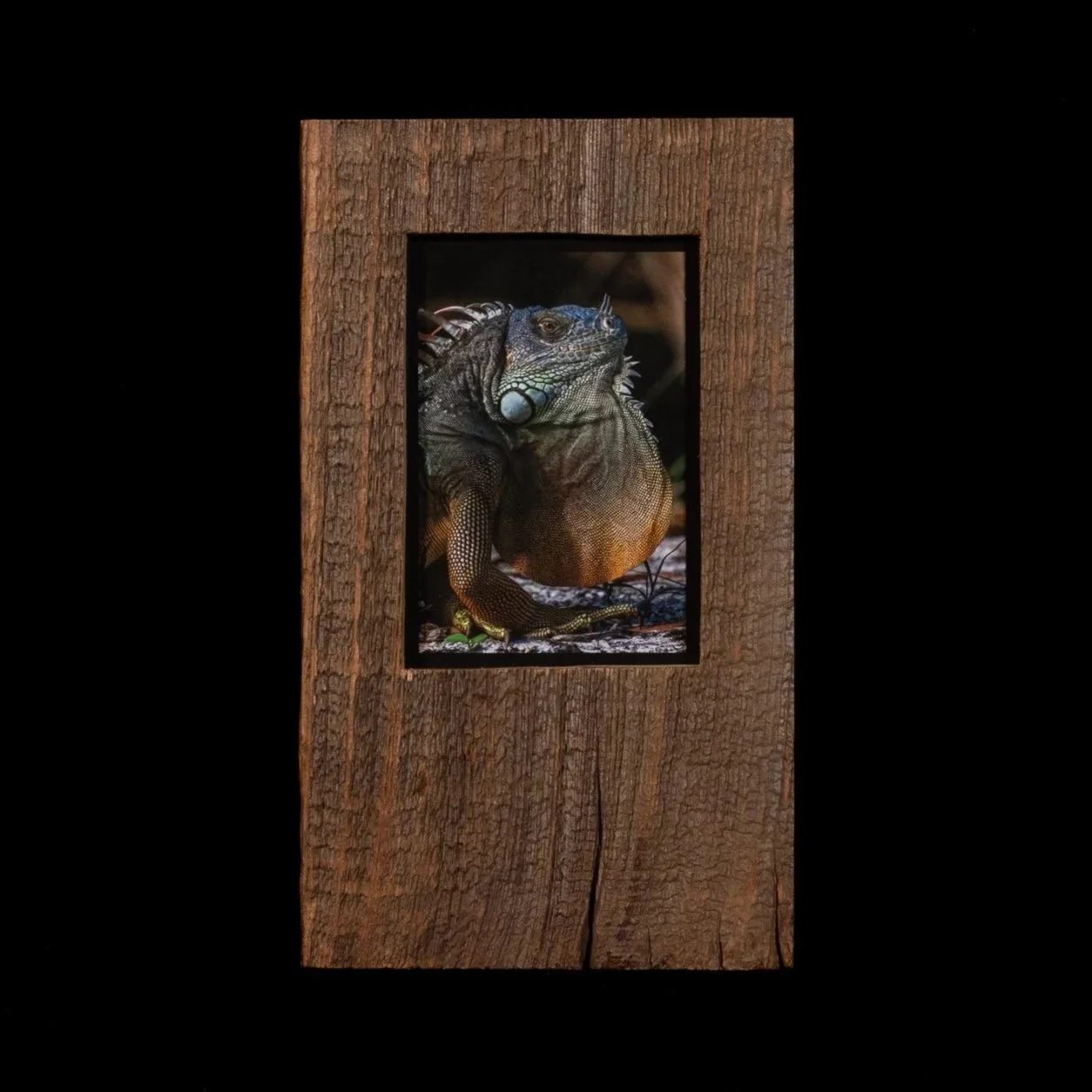
Green Iguana - J.N. "Ding" Darling National Wildlife Refuge, Sanibel Island, FL
Green Iguana (Iguana iguana), Adult, Male
Such majestic looking animals. This guy was hanging out just off of the road that goes through Ding Darling. He didn’t move as I passed by. This photo was taken 6/9/20 at 7:44 am.
WeForest Donation: $20 (What is this?)
Print Number: 1/100
Print Size: 3 × 4.5 in.
Total Dimensions: 5.5 × 9.5 in.
THE PHOTOGRAPH
Green Iguana (Iguana iguana)
Also known as Common Iguana, they are the largest of all lizards in the Americas. Native to Central and South America, this species is a powerful example of the negative side effects of releasing non-native species, usually as pets, into a foreign environment. Green Iguanas have become extremely prevalent in parts of Florida, decimating local populations of Anoles and other lizards.
Additionally, when they are actually kept as pets their lives are usually rough ones. Hard to care for, many die within a year or two. In the wild Iguanas live an average of twenty years, subsisting primarily on leaves and fruit, often near water. Although they have few predators here in the U.S., in their native Central and South America they've learned the skills to evade all kinds of predators, leaping from great heights and swimming long distances. If nothing else works and they’re caught, Green Iguanas, like a lot of lizard species, can detach their tail and grow it back.
THE LOCATION
Sanibel Island, FL
Sanibel Island is in southwestern Florida, off the coast of Fort Myers. The island seems to have been created, along with Captiva just north and connected by a short bridge, around 6,000 years ago. The first humans, the Calusa Indian Nation, arrived 3,500 years later.
Sanibel, the city, was formed in 1974. Home to Bailey Tract Wildlife Preserve, The J.N. “Ding” Darling Wildlife Refuge, Bowman’s Beach Park, and Tarpon Bay, all protected areas with abundant wildlife, preserving the natural areas has been a main focus of the city since its founding. Currently, around two-thirds of the island is fully protected from development.
It is also a sanctuary for shellers. Due to its geographic location and the currents that flow around the island, immense numbers of shells wash upon the shores.
Sanibel will always be a special place for me personally. I first visited Sanibel at a mere ten weeks old. From this place, I grew up learning about nature, animals, ecosystems, climate, and our home, planet Earth. When I was a child, we routinely saw Bobcats, 12-16 foot Alligators, and Spoonbill after Spoonbill after Spoonbill. Unfortunately, once abundant wildlife is harder to see unless you know where to look. Some of this change is due to development and the destruction of the habitat, mostly though, its due to our warming climate.
We tend to not think of this in the present moment, but some of these magnificent creatures that I photograph may not be around in another twenty years, much less 100. We must appreciate them while they are still with us.
J.N. “Ding” Darling National Wildlife Refuge
The J.N. “Ding” Darling National Wildlife Refuge, established in 1976, and located on the northern side of Sanibel Island, FL, is part of the United States National Wildlife Refuge System. The “Ding” Darling Wildlife Society, a nonprofit organization affiliated with the park, supports an environmental education center onsite. The refuge is 5,200 acres, and is one of the nation’s largest undeveloped mangrove ecosystems. You can drive through the refuge on a paved road, and still be amongst the wildlife. Kayaking the rest of the mangrove forest if by far the best way to explore the area.
I’ve been a frequent visitor to the Refuge since my first days in Sanibel. Over the years, I’ve had too many unique experiences to count: Bottlenose Dolphins and Manatees swimming up to us, only feet away; flocks of Snowy Egrets dancing across the water, catching the first meal of the day; Osprey catching fish from an aerodynamic dive from above; Roseate Spoonbills just standing idly by, seeing them in all their glory has always been special enough.
Ding Darling is a special place to me, personally, and is also a special place on Earth, too. Flocks of migratory birds are never too distant, and there are endless twists and turns through the mangroves to explore on many return visits.
The FRAME
Bald Cypress (Taxodium distichum)
Bald Cypress, the giant of the swamp, is a stately, slow growing native of the southeastern United States. Very tough, it can adapt to thrive in a wide range of soils, including very briny, salty, and water soaked areas. Able to grow very tall, it has great stability at its base thanks to its “knees.” The tallest known Cypress was about 145 feet tall. All of the Bald Cypress I have used in my frames has come from different parts of Louisiana.
