
Great Egrets - Wakodahatachee Wetlands, Delray Beach, FL
Great Egrets - Wakodahatachee Wetlands, Delray Beach, FL
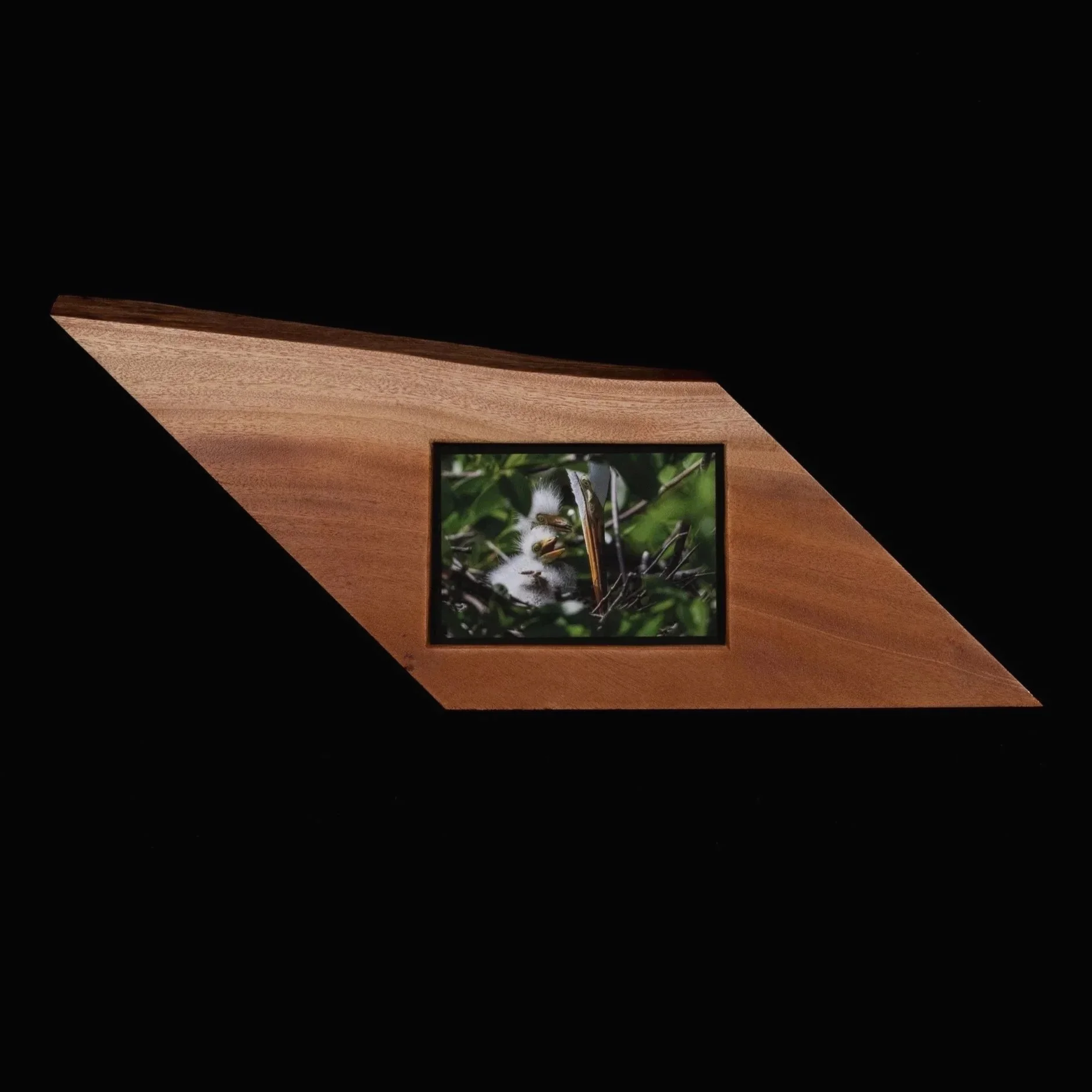
Great Egrets (Ardea alba), Adult and Juveniles
I sat and watched these babies for a number of hours over a couple of days. They were a mere ten days old the day of this photograph according to a volunteer at the wetlands. I was able to watch them eat multiple meals which was astonishingly whole fish! This photo was taken 3/15/24 at 10:40 am.
WeForest Donation: $20 (What is this?)
Print Number: 1/100
Print Size: 3 × 4.5 in.
Total Dimensions: 6.5 × 11 in.
THE PHOTOGRAPH
Great Egret (Ardea alba)
Large birds in their own right, the Great Egret is slightly slimmer than the Great Blue Heron. In a similar story to that of the Snowy Egret and many other waterfowl, Great Egrets were hunted nearly to extinction for their plumes in the late 1800’s. However, thanks to longterm conservation efforts, they too are now of low concern for endangerment and thrive throughout North and Central America.
Great Egrets hunt in the classic way that herons hunt, by wading through shallow water, stalking their prey, and striking with lightning speed. As long as there is water nearby, they are happy, which is why they can be found as far inland as North Dakota. These long journeys to and from the north throughout the year are made more relaxing by their cool, calm, and collected mode of travel. At only two flaps per second, they fly very slowly, but their four to five foot wingspan makes the most of each flap, enabling the birds to cruise at 25 miles per hour.
Great Egrets are a good indicator of what’s next from a nature-watching perspective. In breeding colonies, they are typically the first birds to arrive and tend to persuade other birds to nest nearby.
THE LOCATION
The Wakodahatchee Wetlands, Delray Beach, FL
The Wakodahatchee Wetlands park is located in Delray Beach, FL. It spans across a fifty acre lot, with a three-quarter mile boardwalk that includes multiple gazebos, benches, and informational signage. There are open ponds, marshy areas, mangrove islands for roosting, as well as a wooded area. Formerly utility land, the wetlands were developed as a natural means of managing wastewater. Palm Beach County’s Water Reclamation Facility pumps around two million gallons of water into the park daily. This water is treated, yet still contains excess mineral content. Here in the wetlands the water is naturally purified by the flora of the park and released back into the surface water supply.
Every visit, I see so much life and have yet to be disappointed. Over 150 species of birds have been spotted here as well as turtles, rabbits, and alligators. In the spring you can see large numbers of roosting Wood Storks with their young as well as many young Snowy and Reddish Egrets and Tricolored Herons, stumbling about in the tops of Red Mangroves. Anhingas are ever present, diving for fish or sunbathing atop a perch, wings outstretched. Red-winged Blackbirds chase each other through the tops of tall grasses while Swamp Hens and Gallinules weave through their stems, probing for their next meal.
The FRAME
Bald Cypress (Taxodium distichum)
Bald Cypress, the giant of the swamp, is a stately, slow growing native of the southeastern United States. Very tough, it can adapt to thrive in a wide range of soils, including very briny, salty, and water soaked areas. Able to grow very tall, it has great stability at its base thanks to its “knees.” The tallest known Cypress was about 145 feet tall. All of the Bald Cypress I have used in my frames has come from different parts of Louisiana.
