
Grizzly Bears - Yellowstone National Park, WY
Grizzly Bears - Yellowstone National Park, WY
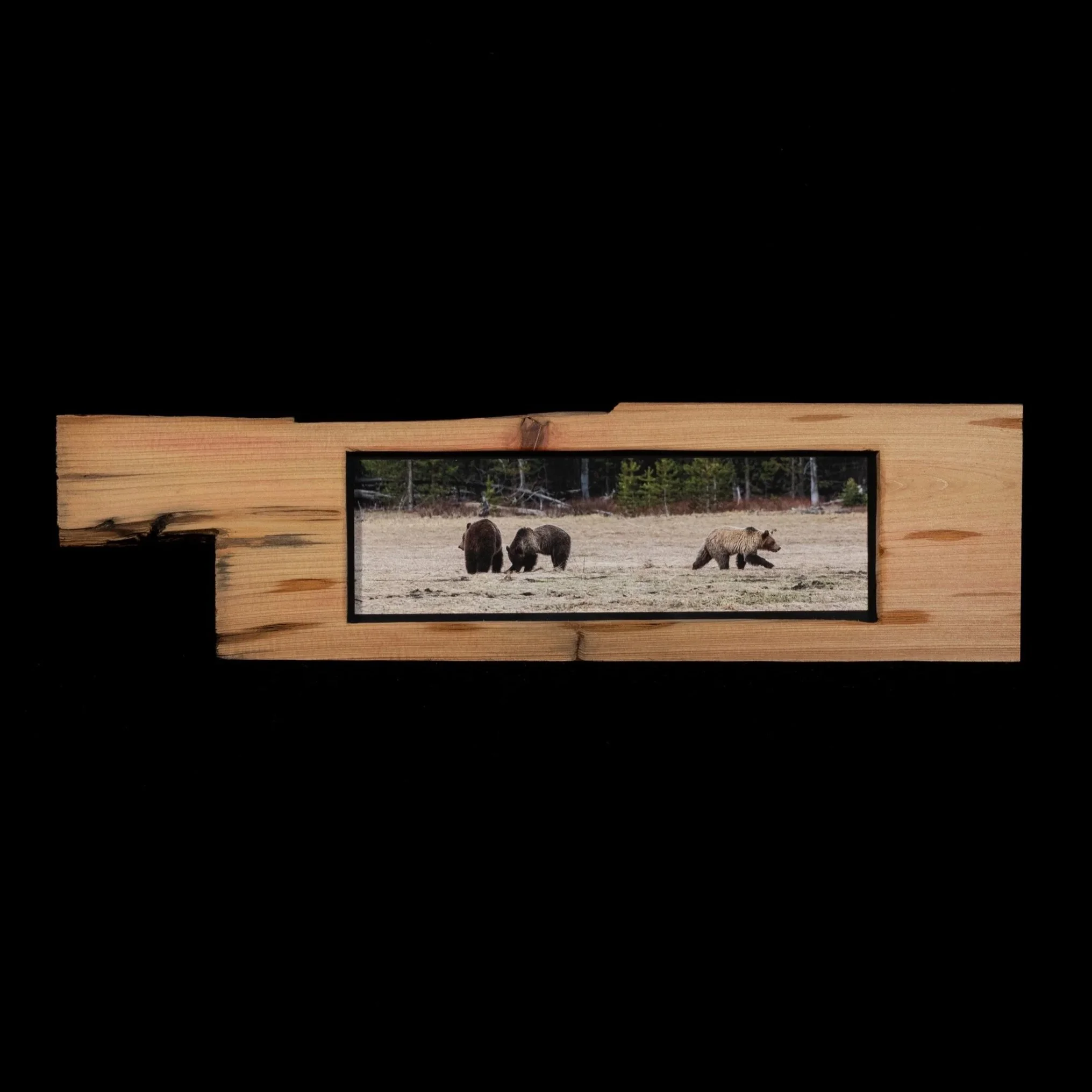
Grizzly Bears (Ursus arctos horribilis), Adult and Immature
I look this photo in the Lamar Valley portion of the park. A couple of years later these exact bears became a bit of a national story when the mother killed the light colored bear in this photograph when the mother began to mate with a male that was not the tan bears father. This photo was taken 5/14/21 at 11:07 am.
WeForest Donation: $20 (What is this?)
Print Number: 1/100
Print Size: 3 × 10 in.
Total Dimensions: 5 × 18.5 in.
THE PHOTOGRAPH
Grizzly Bears (Ursus arctos horribilis)
The Grizzly Bear is a subspecies of the family of Brown Bears that includes the Kodiak, Hokkaido, and Eurasian Brown Bears. Further subspecies of the Grizzly Bear do exist although most have gone extinct only in relative recent history, including the Californian, Mexican, and Ungava-Labrador Grizzlies. These species used to reach as far south as southern Mexico and as far southeast as Tennessee. Although total Grizzly Bear populations are now estimated to be around 55,000 and they have been eliminated in the overwhelming majority of their former territory, they are considered a species of least concern for extinction.
When it comes to their place in the ecosystem, Grizzlies, like all bears, are quite important. They not only help with seed and plant dispersal, but also provide an essential check on many different species they hunt. The leftovers of this omnivorous appetite provides meals to dozens of species further down the food chain that might not have the ability to kill the prey themselves.
Fun Fact: A stark difference from their Brown Bear cousins, Grizzlies do not truly hibernate. By contrast they enter what is sometimes referred to as a “winter sleep” in which their metabolism slows and they survive on accumulated fat, but are not in a state of hibernation.
THE LOCATION
Yellowstone National Park, WY
Established in 1872, Yellowstone National Park was the first national park in the United States. For 10,000 years before, the land was home to many Indigenous Tribes, and many more animals than inhabit the area today. A convergence of the The Great Basin, The Great Plains, and the Columbia Plateau, it is still a special place in this country with a wide array and abundance of life. Having been expanded and more heavily protected over the last century and a half, Yellowstone National Park today stands as the largest intact temperate-zone ecosystem on the planet, preserves over 10,000 hydrothermal features, more than the rest of the planet combined, and is home to the largest concentration of wildlife in the lower 48 states of the United States. That last fact is extremely evident when you are there in person. Although consistently a top 10 most frequented park with between 3 and 4 million visitors annually, the wildlife still exists in droves. I have never experienced the feeling of looking into the past that I feel when I am in Yellowstone. One truly gets a glimpse into the world that existed throughout the United States before this land became the United States. Animals interact with each other and exist in numbers that you simply don’t see throughout the rest of the country. I try to visit once a year to see the ever quickening changes and collect more photos of one of my favorite places I have ever visited.
THE FRAME
Pecky Cypress (Taxodium distichum)
Known as Bald Cypress, this giant of the swamp is native to the southeastern United States. It can adapt to thrive in a wide range of soils, including very briny, salty, and water soaked areas. The pecky nature of the wood is created by a fungus that attacks the tree and eats away at its truck from the inside out. When the tree is cut down the fungus dies and leaves behind the beautiful architecture of its destruction. All of the Bald Cypress I have used in my frames has come from different parts of Louisiana.
