
Great Egret - Old Blind Pass, Sanibel Island, FL
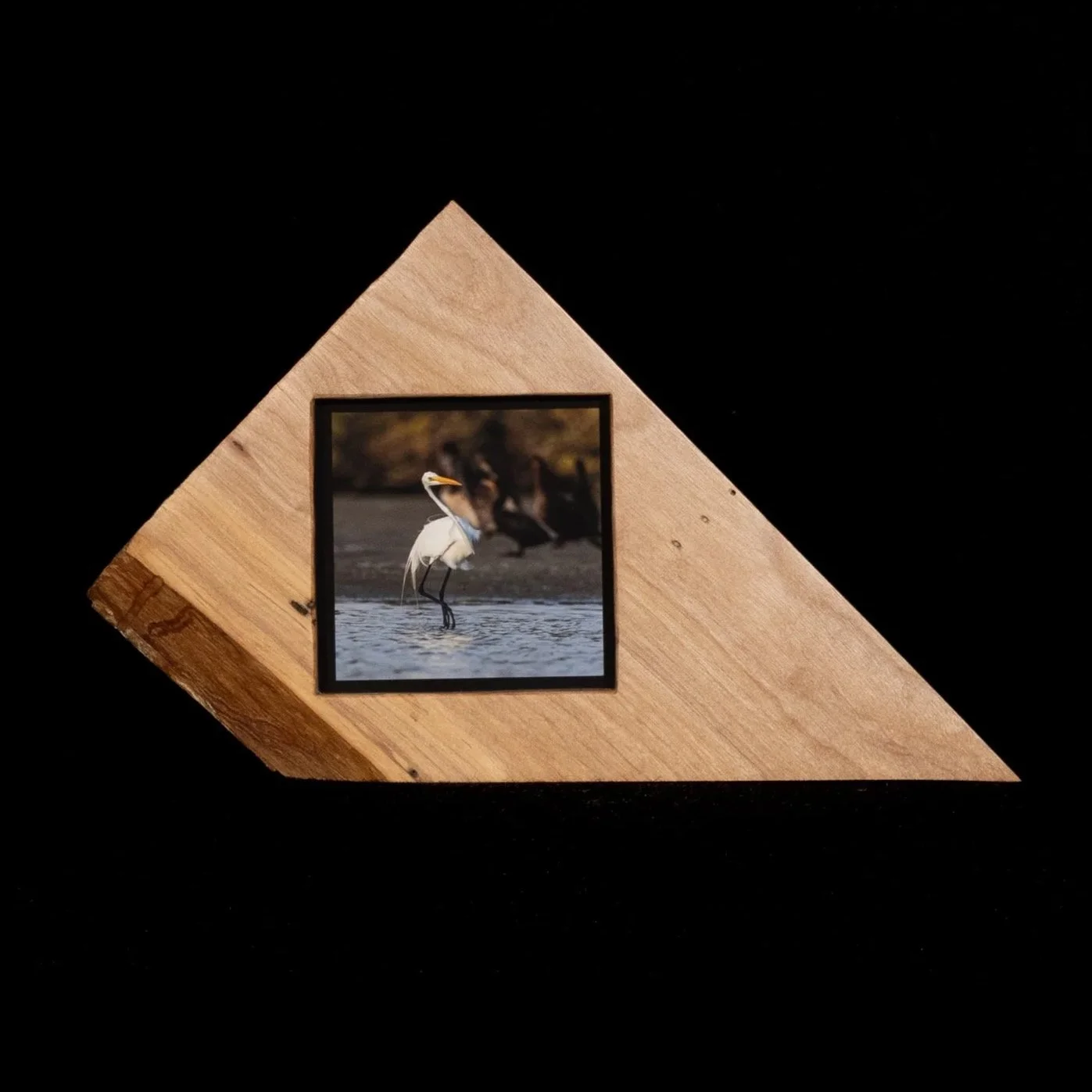
Great Egret - Old Blind Pass, Sanibel Island, FL
Great Egret (Ardea alba), Adult
I took this photo from my Kayak in the waterways around Bowmans Beach. This photo was taken 2/19/20 at 5:36 pm.
WeForest Donation: $20 (What is this?)
Print Number: 1/100
Print Size: 3 × 3 in.
Total Dimensions: 6.5 × 11 in.
The PHOTOGRAPH
Great Egret (Ardea alba)
Large birds in their own right, the Great Egret is slightly slimmer than the Great Blue Heron. In a similar story to that of the Snowy Egret and many other waterfowl, Great Egrets were hunted nearly to extinction for their plumes in the late 1800’s. However, thanks to longterm conservation efforts, they too are now of low concern for endangerment and thrive throughout North and Central America.
Great Egrets hunt in the classic way that herons hunt, by wading through shallow water, stalking their prey, and striking with lightning speed. As long as there is water nearby, they are happy, which is why they can be found as far inland as North Dakota. These long journeys to and from the north throughout the year are made more relaxing by their cool, calm, and collected mode of travel. At only two flaps per second, they fly very slowly, but their four to five foot wingspan makes the most of each flap, enabling the birds to cruise at 25 miles per hour.
Great Egrets are a good indicator of what’s next from a nature-watching perspective. In breeding colonies, they are typically the first birds to arrive and tend to persuade other birds to nest nearby.
The LOCATION
Sanibel Island, FL
Sanibel Island is in southwestern Florida, off the coast of Fort Myers. The island seems to have been created, along with Captiva just north and connected by a short bridge, around 6,000 years ago. The first humans, the Calusa Indian Nation, arrived 3,500 years later.
Sanibel, the city, was formed in 1974. Home to Bailey Tract Wildlife Preserve, The J.N. “Ding” Darling Wildlife Refuge, Bowman’s Beach Park, and Tarpon Bay, all protected areas with abundant wildlife, preserving the natural areas has been a main focus of the city since its founding. Currently, around two-thirds of the island is fully protected from development.
It is also a sanctuary for shellers. Due to its geographic location and the currents that flow around the island, immense numbers of shells wash upon the shores.
Sanibel will always be a special place for me personally. I first visited Sanibel at a mere ten weeks old. From this place, I grew up learning about nature, animals, ecosystems, climate, and our home, planet Earth. When I was a child, we routinely saw Bobcats, 12-16 foot Alligators, and Spoonbill after Spoonbill after Spoonbill. Unfortunately, once abundant wildlife is harder to see unless you know where to look. Some of this change is due to development and the destruction of the habitat, mostly though, its due to our warming climate.
We tend to not think of this in the present moment, but some of these magnificent creatures that I photograph may not be around in another twenty years, much less 100. We must appreciate them while they are still with us.
Old Blind Pass
Bowmans Beach, beautiful and isolated, is a public beach park on Sanibel Island that allows its visitors great shelling opportunities and wildlife viewing. From the parking lot one can also access a put-in for kayaks and canoes that gives you access to Old Blind Pass, a mangrove-banked inland waterway.
Osprey and Eagles can be seen as they hunt and perch on snags high above the water. Manatee are common, meandering up the bayou, grazing as they go.
We visited this area many times when I was a child and although we kayaked in Tarpon Bay and other places on Sanibel, only recently have I begun to discover the treasures of Old Blind Pass. It is yet another unique ecosystem on the incredibly diverse island.
The FRAME
Pecan (Carya illinoinensis)
The Pecan tree is a type of Hickory that is native to the mid south region of the United States. Although it is pronounced many different ways, typically depending on what part of the country you are in, the technical correct pronunciation is “pea-con”. Do with that what you will. One of the most recently domesticated of the major crops, Pecans are now a 265 million pound harvest. Globally, over 90% of the world’s Pecans are grown in the southern United States and Mexico. The beautiful light wood of the pecan tree is used quite readily for furniture and flooring.
