
Burrowing Owl - Brian Piccolo Park, Ft. Lauderdale, FL
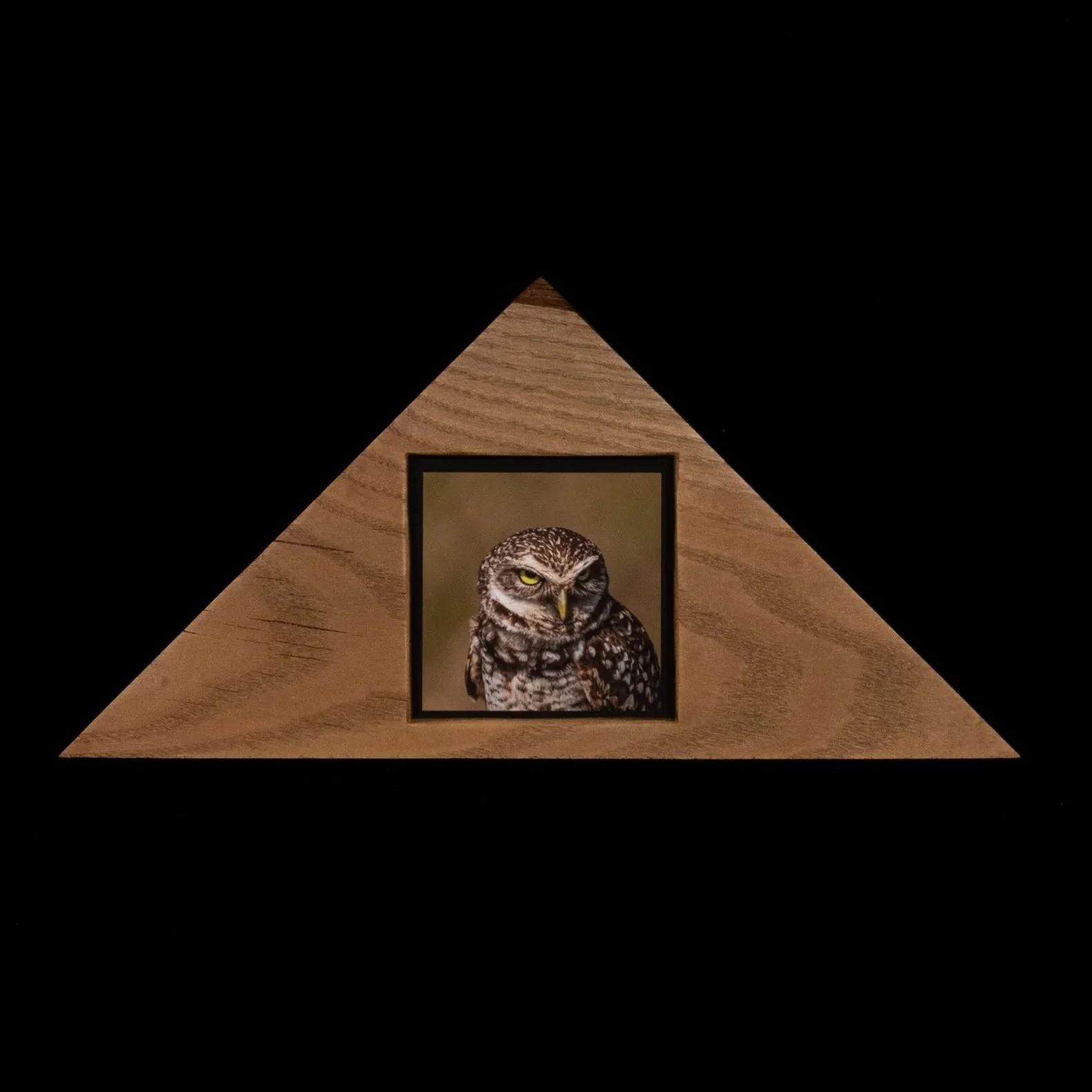
Burrowing Owl - Brian Piccolo Park, Ft. Lauderdale, FL
Burrowing Owl (Athene cunicularia), Adult
We came to this park specifically to see these fascinating birds. This was my first time seeing them in the wild and I will go back many times, and hopefully see them elsewhere as well. This photo was taken 2/1/24 at 11:52 am.
WeForest Donation: $20 (What is this?)
Print Number: 1/100
Print Size: 3 × 3 in.
Total Dimensions: 6 × 12 in.
The PHOTOGRAPH
Burrowing Owl (Athene cunicularia)
A Burrowing Owl is a downright weird bird. Owls are pretty interesting and unique birds to begin with, but a Burrowing Owl takes it to the next level. Living in underground dens, and hunting during the day, it almost seems as if the Owl does not know it is an Owl at all. Some burrows are dug by the Owls themselves — wouldn’t you like to witness that — although they are known to also overtake old tortoise, ground squirrel, or prairie dog holes. They can be found, during parts of the year, throughout the midwestern United States, and year-round throughout the south west, Florida, Mexico, and most of southern South America. They tend to be homebodies, staying near their burrows, and this is especially true during incubation and brooding. They even have food caches in their burrows, building them up when food is plentiful. The largest such cache discovered had over 200 rodents in it!
The LOCATION
Brian Piccolo Park, Ft. Lauderdale, FL
Mostly a sports park, containing multiple soccer fields, baseball diamonds, and even a cricket field, Brian Piccolo Park opened in 1989. The coolest part of the park is less well known, but has a cult following. It is home to quite a plethora of Burrowing Owls. They have staked their claim on the unused fields between parking lots. You can see them if you look very hard and are very patient, and pay attention to the signs. Yes there are signs noting where the Owls reside and warning humans to not get too close as to disrupt the Owls natural behavior.
The FRAME
Black Walnut (Juglans nigra)
A desired wood for its dark, rich color and relative ease to work with, the Black Walnut tree grows in most of the Eastern United States. Walnut trees are cultivated for their nuts of course as well, although their production is irregular with great variation of crop size from year to year.
