
American Bison - Lamar Valley, Yellowstone National Park, WY
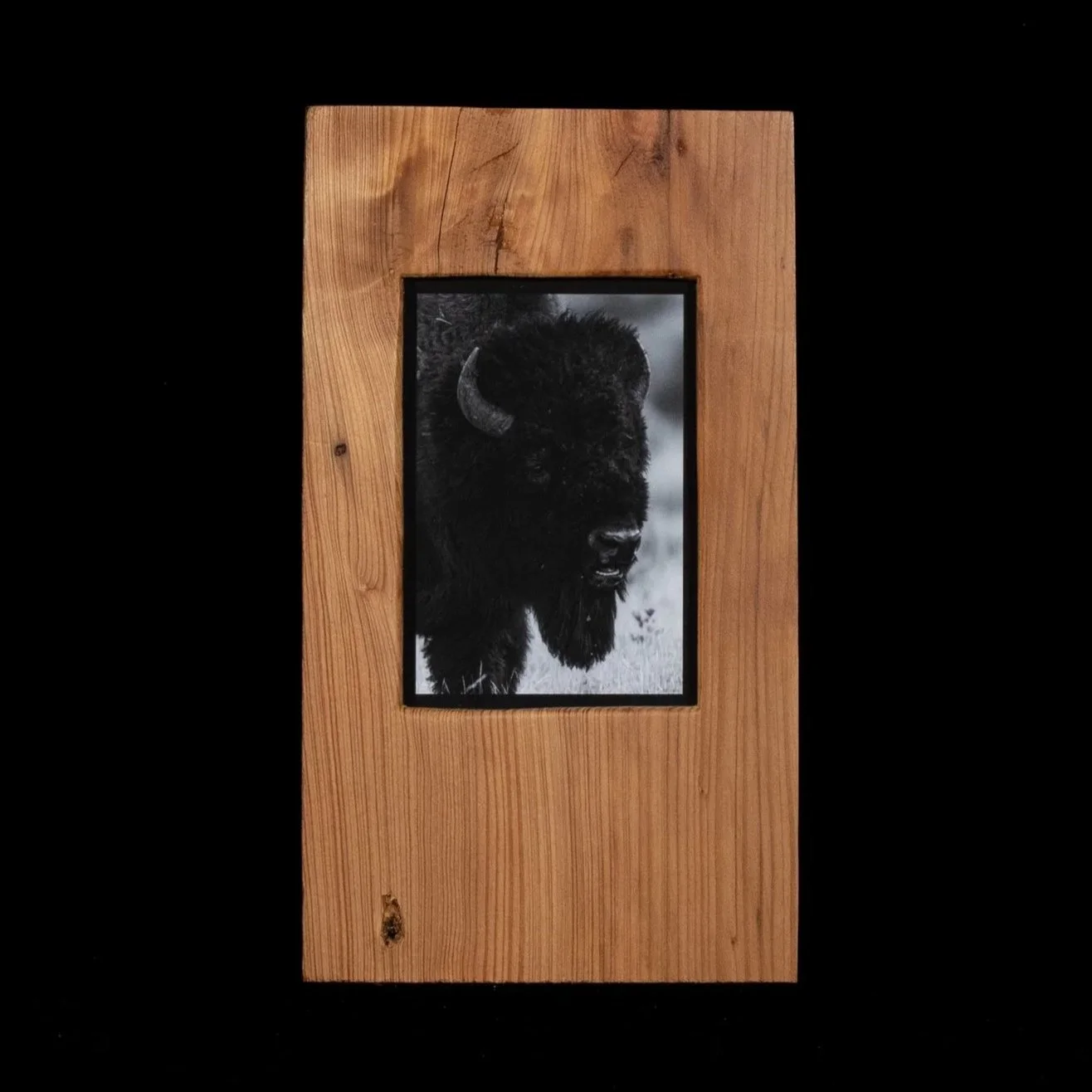
American Bison - Lamar Valley, Yellowstone National Park, WY
American Bison (Bison bison), Adult
I was set up in a spot, shooting straight out of the back of my truck when a heard of Bison made their way closer and closer. They started coming so close in fact that everyone else nearby had to made their way back into their cars. I simply lifted the tailgate and kept shooting. This male was bringing up the rear, making a lot of noise and being quite aggressive. This photo was taken 8/8/24 at 12:20 pm.
WeForest Donation: $20 (What is this?)
Print Number: 1/100
Print Size: 3 × 4.5 in.
Total Dimensions: 5.5 × 10 in.
The Photograph
American Bison (Bison bison)
The largest surviving land animal in North America, American bison can nearly weigh as much as 3000 lbs. They are of course grazers that travel in herds. Herds that are far smaller than they once were. The history of the American Bison is, I believe rather well known. Their near demise at the hands of white settlers alongside the genocide of the Indigenous People of North America, is just one of the ugly beginnings of the United States. The conservation of Bison versus the control of Bison is still a hotly debated topic in some parts of the country. Cattle ranchers opt for the later choice due to concern over property damage as well as the spread of brucellosis, a disease that causes abortions in pregnant livestock. For most of U.S. history, ranchers have gotten their way. However, more and more action is taking place to repopulate areas with Bison and allow them to roam larger areas freely. Just this year—2023—a herd of two dozen bison were released into the wild in The Ninnistaakoo (Chief Mountain) area of Glacier County Montana. The Blackfeet Nation is behind this project that has brought direct descendants of the Bison that used to roam these exact lands back for the first time since 1873. This sacred area is known to the Blackfeet as Mistaaksis — the Backbone of the World.
The Location
Yellowstone National Park, WY
Established in 1872, Yellowstone National Park was the first national park in the United States, and has thus been one for about 150 years. For 10,000 years before, the land was home to many Indigenous Tribes, and many more animals than inhabit the area today. A convergence of The Great Basin, The Great Plains, and The Columbia Plateau, it is still a special place in this country with a wide array and abundance of life. Having been expanded and more heavily protected over the last century and a half, Yellowstone National Park today stands as the largest intact temperate-zone ecosystems on the planet, preserves over 10,000 hydrothermal features, more than the rest of the planet combined, and is home to the largest concentration of wildlife in the lower 48 states of the United States. That last fact is extremely evident when you are there in person. Although consistently a top 10 most frequented park with between 3 and 4 million visitors annually, the wildlife still exists in droves. I have never experienced the feeling of looking into the past that I feel when I am in Yellowstone. One truly gets a glimpse into the world that existed throughout the United States before this land became the United States. Animals interact with each other and exist in numbers that you simply don’t see throughout the rest of the country. I try to visit once a year to see the ever quickening changes and collect more photos of one of my favorite places I have ever visited.
THE FRAME
Bald Cypress (Taxodium distichum)
Bald Cypress, the giant of the swamp, is a stately, slow growing native of the southeastern United States. Very tough, it can adapt to thrive in a wide range of soils, including very briny, salty, and water soaked areas. Able to grow very tall, it has great stability at its base thanks to its “knees.” The tallest known Cypress was about 145 feet tall. All of the Bald Cypress I have used in my frames has come from different parts of Louisiana.
