
American Alligator - Wakodahatchee Wetlands, Delray Beach, FL
American Alligator - Wakodahatchee Wetlands, Delray Beach, FL
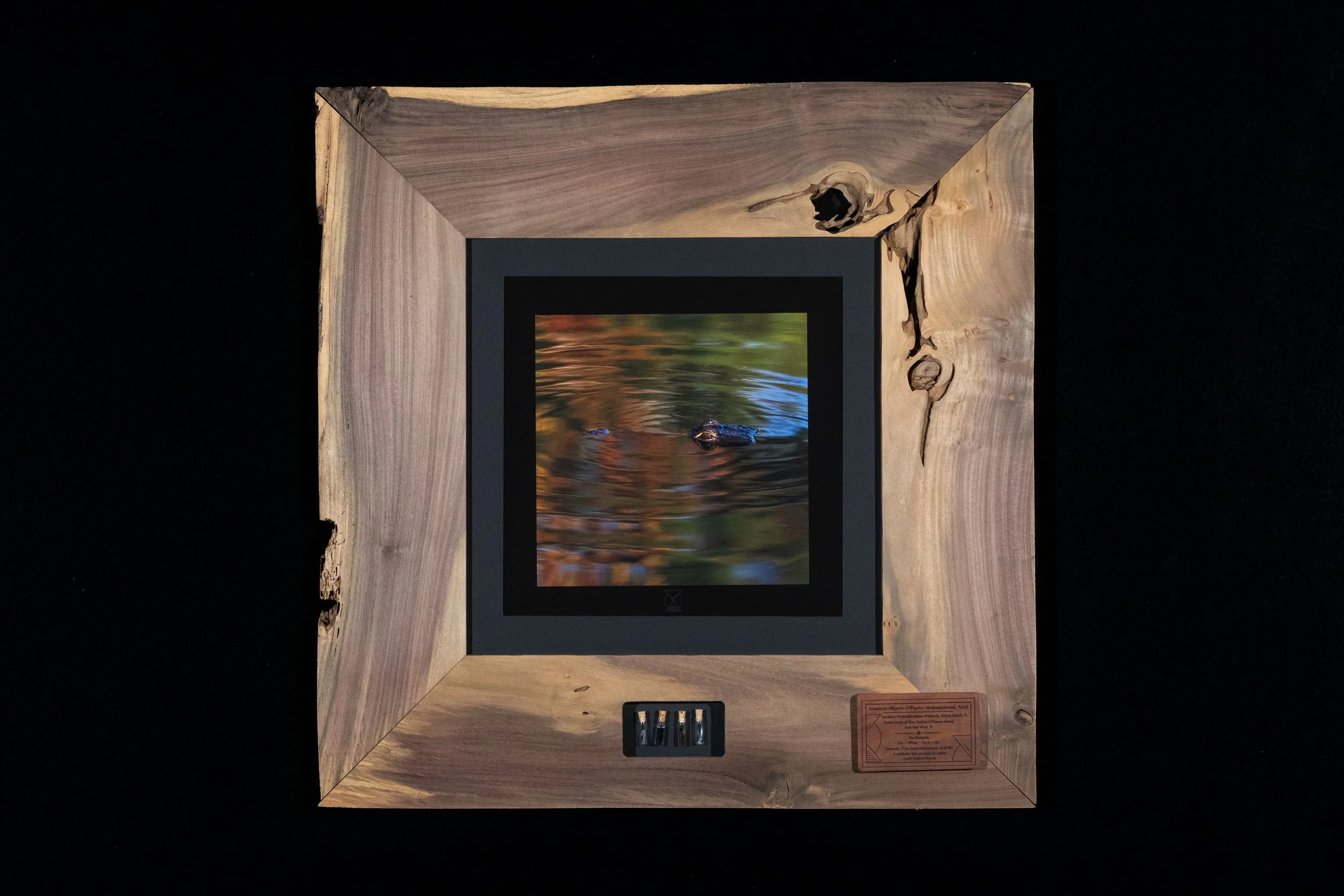
American Alligator (Alligator mississippiensis), Adult
On a crisp winter morning in the Wetlands the light was just right to get a nice reflection of the trees above this gator. This photo was taken 2/1/23 at 8:15 am.
WeForest Donation: $210 (What is this?)
Print Number: 1/10
Print Size: 18 × 18 in.
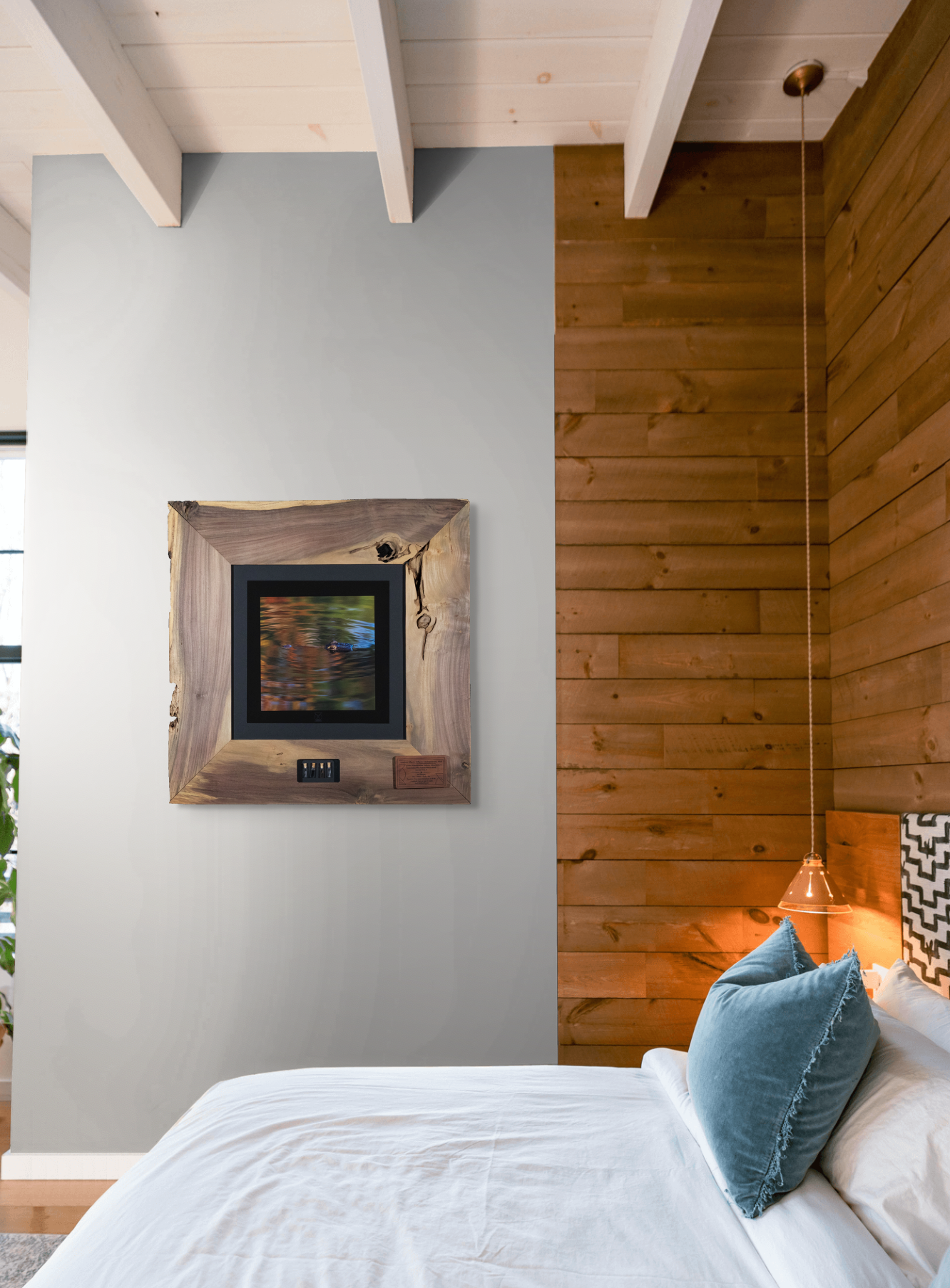
Total Dimensions: 32 × 32 in.
Total Weight: 16 lbs
Hanging equipment and certificate of authenticity included.
The PHOTOGRAPH
American Alligator (Alligator mississippiensis)
The American Alligator is another conservation success story. Once on the brink of extinction, it now thrives again. It has avoided extinction more than once, as the species is around 150 million years old, thwarting nature’s attempts to extinguish it 65 million years ago when the dinosaurs died.
Adapted for life in the water, North American Alligators reside in freshwater primarily in Florida and Louisiana. Excellent swimmers, they spin their prey in the water, disorienting and drowning them. Alligators are opportunists and although they typically eat fish, turtles, snakes, and small mammals, they will also eat birds, pets such as dogs and cats and occasionally even humans in rare instances.
Often confused with Crocodiles, the easiest way to differ between the two is to look at their mouth and teeth. Both rows of a Crocodile’s teeth are visible when its mouth is closed. While the Alligator’s top row of teeth are the only ones that are visible.
The LOCATION
The Wakodahatchee Wetlands
The Wakodahatchee Wetlands park is located in Delray Beach, FL. It spans across a fifty acre lot, with a three-quarter mile boardwalk that includes multiple gazebos, benches, and informational signage. There are open ponds, marshy areas, mangrove islands for roosting, as well as a wooded area. Formerly utility land, the wetlands were developed as a natural means of managing wastewater. Palm Beach County’s Water Reclamation Facility pumps around two million gallons of water into the park daily. This water is treated, yet still contains excess mineral content. Here in the wetlands the water is naturally purified by the flora of the park and released back into the surface water supply.
Every visit, I see so much life and have yet to be disappointed. Over 150 species of birds have been spotted here as well as turtles, rabbits, and alligators. In the spring you can see large numbers of roosting Wood Storks with their young as well as many young Snowy and Reddish Egrets and Tricolored Herons, stumbling about in the tops of Red Mangroves. Anhingas are ever present, diving for fish or sunbathing atop a perch, wings outstretched. Red-winged Blackbirds chase each other through the tops of tall grasses while Swamp Hens and Gallinules weave through their stems, probing for their next meal.
The FRAME
Blue Mahoe (Hibiscus elatus)
The National Tree of Jamaica, Blue Mahoe is a very unique wood. It is common throughout the Caribbean islands, growing as far north as the Keys of the United States, where I have sourced mine from. It is one of the very few woods that has a gray overall tone to its heartwood and can display streaks of blue, green, or purple hues throughout. It is a very hard wood with tight grain which makes it a very high quality wood for furniture making, bowl turning, or similar uses. It is one of my favorite woods that I have worked with and I would love to be able to get my hands on some more of it.
THE ELEMENTS
Fire, Water, Earth, and Air
In the display case in the bottom of the frame, four items are in preserved glass vials. The items represent the elements: fire (wood charcoal), water (mineral oil), earth (soil), and air (a milkweed seed). I include these items in my work as a symbol of the interconnectedness of all life on Earth, and as a reminder that humans must do better.
THE PLAQUE
Magnetic Information Plaque
I engrave a wooden information plaque for each work. The plaque includes what the photograph is of, the location of the photograph, what type of wood the frame is made of, and where I sourced the wood. The plaques also explain why the vials are included in each work. The back of each plaque states the meaning of my logo: “The circle represents our home, Planet Earth. The hourglass represents time. The five horizontal lines in the bottom of the hourglass represent the five mass extinction periods that have occurred in the past. The single line falling through the hourglass represents our current mass extinction period, caused by us.” The plaques are attached magnetically and can be removed to read or to store on the back of each frame if you prefer not to have it displayed on the front.
